
5 Laravel packages that make development more fun
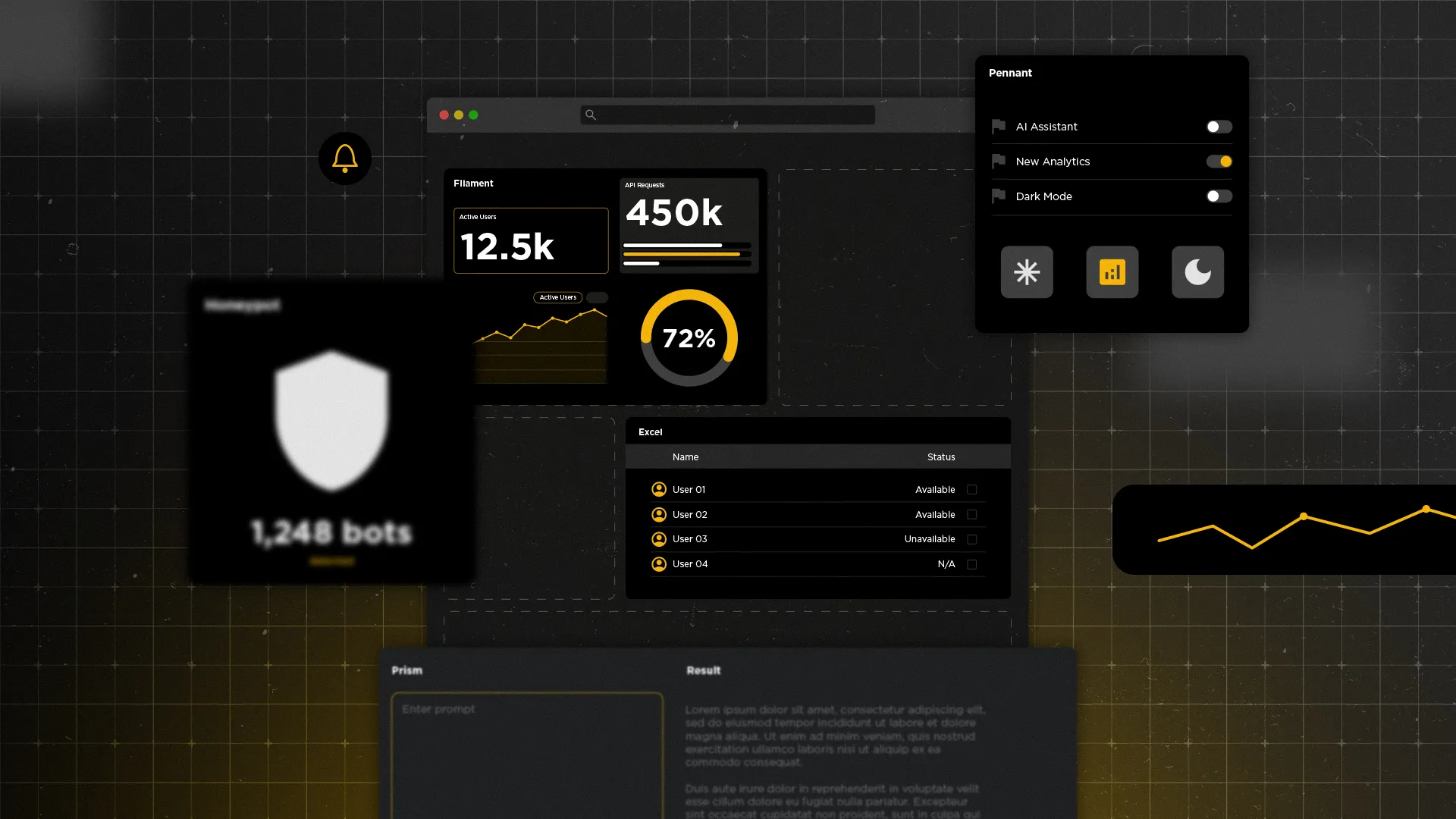


Most "top Laravel packages to know now" lists feature all the usual suspects: Debugbar, Sanctum, Socialite, repeat. It’s useful, sure, but it’s not exactly exciting. So instead, here are five packages that are genuinely fun to work with, either because they save you from a boring task, do something a little unexpected, or just make your day-to-day dev experience nicer.
1. Filament
Filament is what happens when someone decides admin panels don't have to be miserable to build. Built on the TALL stack (Tailwind, Alpine.js, Livewire), it lets you generate full CRUD interfaces, forms, tables, and dashboards straight from your Eloquent models, often in just a few lines of configuration. What makes it fun rather than just useful is how fast the feedback loop is: you write a resource class, and a few seconds later you have a polished, interactive admin panel staring back at you. It's the closest Laravel gets to ‘it basically builds the UI for you.’
public static function form(Form $form): Form
{
return $form->schema([
TextInput::make('name')->required(),
TextInput::make('email')->email()->required(),
]);
}
That's it. That's the whole form. Two fields, some validation, and Filament turns it into a fully styled, fully unctional input screen, no CSS required. And that means no, “Why is this div not centered?” 2am rage necessary.
2. Laravel Excel (maatwebsite/excel)
Import/export functionality is one of those features every client eventually asks for and every developer dreads writing from scratch. Laravel Excel turns "generate a spreadsheet of all our orders" from a multi-hour slog into a few lines of code: exports, imports, chunked reading for huge files, even queued exports for files too big to generate on the fly. It's not flashy, but there's a real satisfaction in watching a gnarly CSV/XLSX problem disappear behind a clean Excel::download() call.
Excel::download(newOrdersExport, 'orders.xlsx');
One line. That's the whole spreadsheet. Somewhere, a developer from 2015 is weeping into their manually-built CSV loop.
3. Laravel Pennant
Ever wanted to test a big, scary change on your live site without fully committing to it, like a nervous person dipping one toe in a swimming pool before deciding whether to jump in? That's Laravel Pennant. It lets you define "features" and decide exactly who sees Feature A versus Feature B, so you're never betting the whole site on a hunch.
Say you've got a new layout you're convinced will boost sales, but you're not quite ready to bet your job on it. With Pennant, you can quietly roll it out to just 33% of users, watch what happens, and track the results before deciding whether to commit or quietly pretend it never happened.
Feature::define('new-layout',fn () => Lottery::odds(1, 3));
if(Feature::active('new-layout')) {
// show the new layout
}
Somewhere in the world, a Lottery class is deciding people's fate with better odds than most actual lotteries. One in three users gets the shiny new layout; the other two get to carry on blissfully unaware that they were even in an experiment at all.
4. Prism
Prism is a fluent, provider-agnostic way to bring AI into a Laravel app. Instead of hand-rolling HTTP calls to OpenAI, Anthropic, or whichever model you're using this month, you get a clean, chainable API for text generation, structured output, tool calling, and multi-step agent-style conversations. And swapping providers? Often it’s just a config change, not a rewrite. What makes it fun is how quickly you go from "I want to add an AI feature" to actually having one working: define a prompt, wire up a tool the model can call, and you've got something that feels a little bit like magic running in your app.
$response =Prism::text()
->using('anthropic', 'claude-sonnet-4')
->withPrompt('Write a haiku about Laravel')
->generate();
Four lines of PHP, and now your app writes haikus. Try explaining to your project manager that "add AI" used to take a sprint.
5. Laravel Honeypot
As AI gets more and more prevalent, it's easy to fall victim to a large volume of junk-form submissions on your website. Laravel Honeypot works by adding an invisible field to the form. Normal users won't see this and won't fill it in, but bots and malicious attackers will try to fill in the whole form, triggering this trap. This voids the submission, and legitimate users are none the wiser.
<form method="POST">
@honeypot
{{-- your regular fields --}}
</form>
One directive, and your form now has a tiny invisible trapdoor. Bots stumble in every time, real humans never even know it's there. It's basically a booby trap from a cartoon, except instead of an anvil, it's a silently rejected HTTP request.
Let’s wrap this up
None of these are the "obvious" picks you'd find on every list, but that's the point. Filament and Laravel Excel solve real, common problems in a way that feels good to use, and Pennant, Prism, and Honeypot are proof that even the smaller corners of the Laravel ecosystem have some genuinely clever ideas hiding in them. Worth a look next time you're bored of writing the same boilerplate for the tenth time.
Want help with your web development dilemmas?
At Proctor + Stevenson, we pride ourselves on knowing just what’s needed to make your website work the way you need it to. Fancy speaking to one of our experts? Drop us a line at marketing@proctorsgroup.com





.webp)

