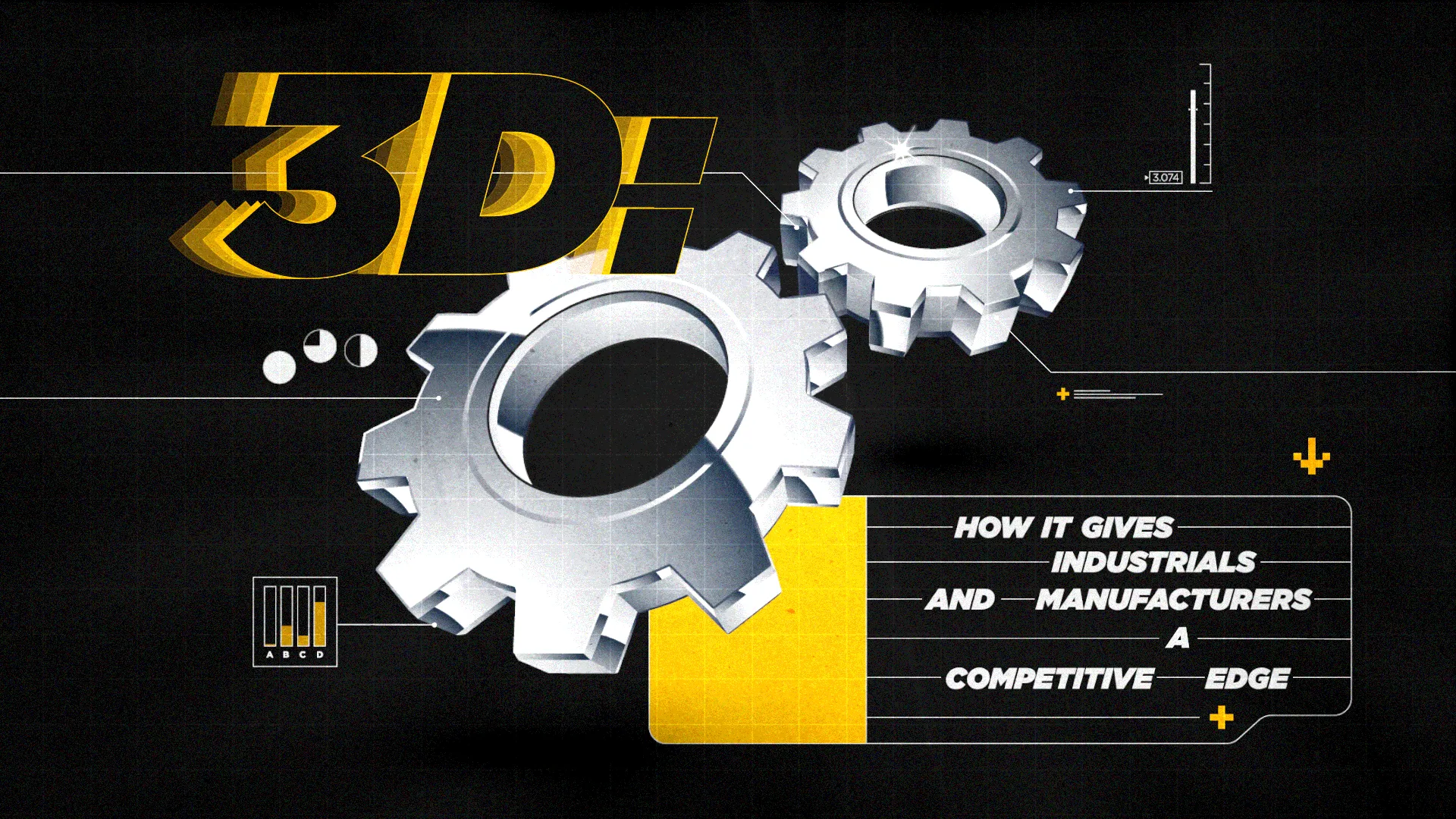
3D: sut mae'n rhoi mantais gystadleuol i ddiwydiannau a gweithgynhyrchwyr


Mae cynhyrchion cymhleth yn haeddu mwy na ffotograffiaeth wastad. Maent yn ddarnau anhygoel o beirianneg sydd angen cael eu harddangos yn y ffordd gywir. Ond yn y byd diwydiannol a gweithgynhyrchu, mae eich arloesiadau yn aml wedi'u cuddio'n ddwfn y tu mewn i systemau mwy, wedi'u selio o fewn gorchuddion, neu'n rhy fawr, yn rhy beryglus, neu wedi'u lleoli'n rhy anghysbell i'w ffilmio. Ac eto, mae angen i chi eu hegluro'n glir, yn gyflym ac yn argyhoeddiadol.
Dyna lle gall 3D roi mantais gystadleuol i chi. Mae prynwyr heddiw yn disgwyl eglurder. Maent yn disgwyl rhyngweithio. Maent yn disgwyl gweld sut mae rhywbeth yn gweithio, nid dim ond darllen amdano. Mae 3D yn ein grymuso i adrodd y straeon hynny gyda manwl gywirdeb, creadigrwydd a rheolaeth.
Pam y dylai 3D fod yn rhan o'ch pecyn cymorth marchnata eisoes
Ar gyfer brandiau diwydiannol a gweithgynhyrchu, mae 3D yn datrys heriau na all ffotograffiaeth neu fideo traddodiadol yn aml, drwy:
- Egluro peirianneg gymhleth ar unwaith
- Cyfathrebu nodweddion anweledig a mecanweithiau mewnol
- Lleihau dibyniaeth ar brototeipiau ffisegol
- Gwneud gwerthu o bell yn llawer haws
- Creu llinellau cynhyrchu cynnwys y gellir eu hailddefnyddio
- Safoni delweddau'n fyd-eang ar draws timau
- Diogelu eich presenoldeb digidol ar gyfer y dyfodol
Yn gryno: mae 3D yn helpu prynwyr technegol i ddeall cynhyrchion technegol yn gyflym. Gadewch i ni archwilio ei fanteision ychydig yn fwy manwl.
Mantais eglurder: egluro'r anweledig
Ychydig o offer sy'n gallu symleiddio peirianneg gymhleth fel 3D. Mae'n ein galluogi i ddadosod cynhyrchion, eu torri ar agor, eu gwneud yn 'dryloyw', a dangos yn union sut maent yn gweithredu o fewn system ehangach. Mae ein partneriaeth hirdymor gyda thîm Atebion Gwrth-dirgryniad (AVS) Trelleborg wedi ein galluogi i ddangos hyn yn uniongyrchol. Mae eu cynhyrchion gwrth-dirgryniad polymer yn eistedd yn ddwfn y tu mewn i beiriannau – trenau, tyrbinau gwynt, cerbydau adeiladu – ac anaml y mae llun safonol yn dweud y stori gyfan.
Felly, fe wnaethom adeiladu iaith weledol iddynt – golygfeydd wedi'u torri, datguddiadau adrannol, golygfeydd wedi'u ffrwydro, a thryloywder mewnol, i gyd wedi'u gwreiddio mewn dealltwriaeth dechnegol.
Y tu ôl i bob delwedd mae oriau o alinio peirianneg — glanhau CAD, dilysu deunyddiau, ymgynghori ag arbenigwyr cynnyrch, a phrofi straen ar resymeg ymddygiad pob cydran. Nid yw'r ddelwedd derfynol yn brydferth yn unig; mae'n ddigon cywir i beiriannydd ymddiried ynddi.
Y cyfuniad hwn o estheteg a manwl gywirdeb yw grym arbennig 3D.
Pan nad yw ffilmio’n bosibl: adroddwch y stori gyda 3D
Mae rhai cynhyrchion yn rhy anghysbell, yn rhy fawr, yn rhy fach, yn rhy newydd (efallai nad oes prototeipiau eto), neu’n syml ddim ar gael i’w ffilmio. Ni ddylai hynny atal lansiad gwych.
Cymerwch Ddiwrnod Marchnadoedd Cyfalaf Trelleborg neu lansiad TOUGHBOOK 40Panasonic, fe wnaethom greu animeiddiadau 3D a wnaeth:
- Amnewid sesiynau ffilmio drud ar leoliad
- Delweddu cydrannau nad oeddent wedi’u gweithgynhyrchu eto
- Galluogi onglau camera amhosibl
- Darparu asedau parod ar gyfer y byd heb gyfyngiadau ffisegol
Mewn achosion fel hyn, nid yw 3D yn gynllun wrth gefn cost-effeithiol yn unig: mae’r cyfleoedd creadigol yn ehangu o’r eiliad y byddwn yn gadael cyfyngiadau set ffisegol. Gallwn symud y tu mewn i beiriannau, arafu amser, tynnu sylw at rymoedd straen, lliwio llif aer, neu ddatgelu haenau is-wyneb.
Pan wnaethom symud swyddfeydd ym Mryste, profodd 3D ei werth ymhell cyn i’r adeiladwr cyntaf gyrraedd y safle. Gan ddefnyddio dim ond glasbrintiau, samplau lloriau, gorffeniadau pren a samplau paent, fe wnaethom greu taith gerdded 3D o’r man gwaith newydd. Ni wnaeth y daith rithwir honno ein helpu i ddychmygu’r gofod yn unig - fe’n galluogodd i’w brofi, ei fireinio, a gwneud penderfyniadau dylunio hyderus cyn i un gosodiad gael ei osod.
Y canlyniad? Newidiadau hanfodol i’r cynllun wedi’u gwneud yn gynnar, dim syrpréis drud yn ddiweddarach, a gofod terfynol a weithiodd yn union fel yr oedd ei angen arnom. Mae’n enghraifft berffaith o sut mae 3D yn dileu risg, yn cyflymu’r broses o wneud penderfyniadau, ac yn rhoi eglurder i chi ymhell cyn i’r byd go iawn ddal i fyny.
Astudiaeth achos: Lansiad Cobot cyntaf Epson
Pan oedd angen i Epson ddod â’u Cobot (robot cydweithredol) cyntaf i’r farchnad, roedd y briff yn syml: gwnewch iddo edrych mor fanwl gywir ac osgeiddig â’r peirianneg y tu ôl iddo.
Ymatebasom gyda animeiddiad 3D hynod steilus yn arddangos:
- Amrediad symudiad manwl
- Negeseuon am dorque a llwyth tâl
- Y dyluniad diwydiannol minimalaidd, premiwm
- Nodweddion cynnyrch wedi'u hamlygu trwy olau, mudiant, ac amgylchedd
Dim angen llwyfan ffisegol drud. Dim angen rigiau goleuo cymhleth sy'n cymryd llawer o amser. Dim ond byd rhithwir wedi'i reoli'n berffaith, hawdd ei olygu, ac wedi'i deilwra i'r cynnyrch.
3D rhyngweithiol a realiti estynedig (AR)
Wrth i ddisgwyliadau digidol godi, mae prynwyr diwydiannol eisiau mwy na delweddau sgleiniog. Maen nhw eisiau gallu rheoli cynnyrch, ei gylchdroi, chwyddo i mewn, ac archwilio mannau poeth. Efallai hyd yn oed ei osod yn eu gweithdy gan ddefnyddio AR.
Dyna pam rydyn ni wrth ein bodd yn cyfuno 3D rhyngweithiol â fframweithiau ysgafn fel Google <model-viewer>. Mae'n gyflym, yn gyfeillgar i ddyfeisiau, ac yn hynod effeithlon ar gyfer troi CAD yn brofiad cynnyrch amser real.
Mae <model-viewer> yn rhoi i ni:
- Gwyliwr 3D glân sy'n cael ei gefnogi'n dda
- Rhyngweithio cyfeillgar i sgrin gyffwrdd
- Anodiadau mannau poeth
- Cyn lleied o god â phosibl
Mae hanner y gwaith wedi'i wneud yn aml gan gleientiaid oherwydd bod ganddyn nhw ffeiliau CAD. Rydyn ni'n eu hoptimeiddio, yn creu deunyddiau PBR, ac yn eu hintegreiddio'n syth i'r porwr.
Astudiaeth achos: Sganiwr bwrdd gwaith Epson
Fe wnaethom optimeiddio model gweithgynhyrchu Epson gan ddefnyddio decimation gyda chymorth AI (sy'n lleihau nifer y polygonau), yna ychwanegu deunyddiau a adeiladu profiad 3D ac AR cwbl ryngweithiol — i gyd mewn llai na 240 llinell o god.
Cyflym i'w adeiladu, ysgafn i'w redeg, ac yn drawiadol ar unrhyw ddyfais. Dyma lle mae marchnata, galluogi gwerthiant, a hyfforddiant cynnyrch yn dechrau uno: un ased 3D sy'n cyflawni gwaith llawer o offer eraill.
Y prif neges?
Os yw eich cynnyrch yn gymhleth, mae 3D yn ei wneud yn ddealladwy.
Os yw wedi'i guddio, mae 3D yn ei wneud yn weladwy.
Os nad yw ar gael, mae 3D yn ei wneud yn real.
Ac mewn byd lle mae eich cystadleuwyr yn brwydro am sylw, mae eglurder a rheolaeth yn fanteision sy'n werth buddsoddi ynddynt.
Os hoffech archwilio troi eich CAD yn ddelweddau, fideos esboniadol, neu asedau rhyngweithiol, byddem wrth ein bodd yn siarad. Gallwch anfon neges atom yn marketing@proctorsgroup.com